

Cyclone Separator
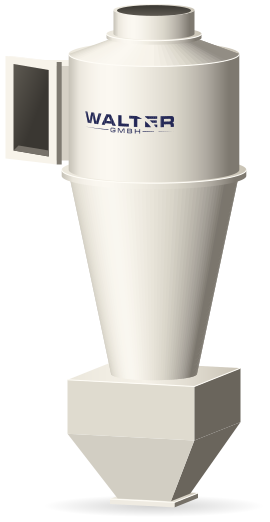
WALTER cyclone separators are installed upstream of the actual filter unit and serve for pre-separation of dry and free-flowing dusts. Medium and coarse dust particles are already separated in advance, protecting the filter media and minimizing their wear. Used as spark pre-separators, they minimize fire risk. They are also suitable for recovery of bulk materials.
WL cyclones are deployed in woodworking, in foundries and fettling shops, in metalworking and wherever dry, heavy or spark-laden dusts are generated. As pre-separators upstream of bag or cartridge filters, they extend filter media service life and reduce maintenance effort across the entire installation.
Advantages
- Low maintenance, no moving parts
- High operational reliability in continuous operation
- Low space requirement thanks to vertical design
- Improves the efficiency of downstream filter systems
- Low flow resistance and reduced energy demand
- Minimization of fire risk through spark separation
- Protection against overload and clogging of the main dust collector
Applications
Cyclone separators are used in many industries as pre-separators, spark traps or for bulk material recovery:
- Wood and shaving dusts in woodworking
- Chips and grinding dusts in metalworking
- Blasting media and sparks in foundries and fettling shops
- Bulk material recovery in process industries
- Flue gas pre-separation at melting and drying plants
- Pre-separation in pneumatic conveying systems
- Recycling and processing plants
Suitable Dusts and Bulk Materials
Cyclones operate particularly efficiently on dry, free-flowing and medium- to coarse-grained particles. Typical applications include:
- Wood and shaving chips
- Metal dusts, blasting media and abrasive grit
- Sand and mineral dust
- Granulates, pellets and other bulk materials
- Sparks and glowing particles
Operating Principle
The cyclone separators operate according to the centrifugal principle. The raw gas enters the cylindrical part via the tangential inlet channel. The dust particles are thrown against the outer wall by centrifugal force and separated downward via the funnel-shaped outlet into the settling tank below. The cleaned air leaves the pre-separator at the upper, central exhaust air outlet.
Since cyclones operate without moving components, they are robust, durable and virtually maintenance-free. By appropriately sizing inlet velocity, cyclone diameter and dip-tube length, the cut-off particle size can be tuned to the specific application.
Coarse particles end up in the settling tank, fine particles leave the cyclone with the clean gas. Medium particles lie at the cut-off size and split between both paths.
For coarse particles, centrifugal force dominates. It presses the particles against the wall, where they slide down in the outer vortex into the settling tank.
Medium particles lie close to the cut-off size. Some reach the wall and are separated, others get caught in the inner vortex and pass through. The cut-off size is a transition, not a sharp boundary.
For fine particles, the drag of the air dominates. They follow the inner vortex upwards and leave the cyclone through the dip tube. They require a downstream filter.
Application Example: Multi-Stage Cyclone Installation
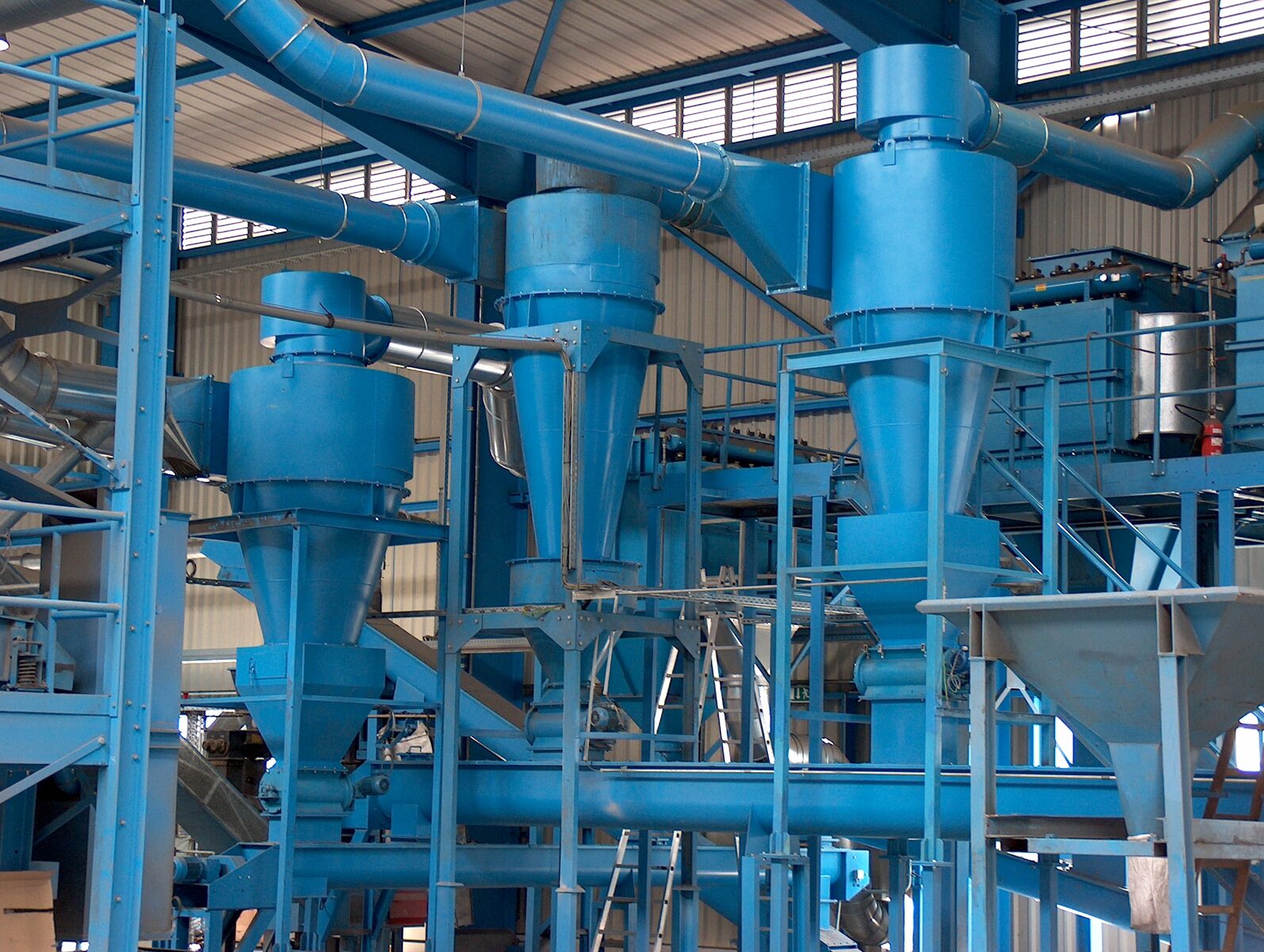
The example shows a multi-stage cyclone installation in which several cyclones are arranged in parallel and in series to handle large volume flows while separating different particle size fractions. The individual cyclones are connected to the main system via welded pipes; the separated dusts fall into settling tanks beneath the hoppers.
Such installations typically operate as pre-separation stages upstream of a bag filter or cartridge filter system. The downstream main filter then achieves significantly longer service life because the coarse dust fraction has already been removed by the cyclone. In spark-laden processes, the cyclone additionally acts as a spark trap and protects the filter medium from glowing particles.
Technical Key Data
| Volume Flow Range | 1,000 to 60,000 m³/h, larger volumes via parallel arrangement |
| Construction | Tangential inlet channel, cylindrical vortex chamber, conical hopper, central clean gas outlet |
| Materials (standard) | Sheet steel, painted or galvanized |
| Special Materials | Wear-protection plates in inlet and hopper area, stainless steel and heat-resistant materials on request |
| Dust Discharge | Settling tank, optional rotary valve or screw conveyor |
Options
- Wear protection for abrasive dusts
- Rotary valve for continuous dust discharge
- ATEX-compliant safety equipment for combustible dusts
- Thermal insulation for hot raw gas
- Special materials for corrosive media
Versions
The cyclone separators are available from 1,000 m³/h to 60,000 m³/h. Larger air capacities are realized by arranging several cyclones in parallel or as customer-specific designs.
Dimensions and Volume Flow
Standard sizes overview. Dimensions in mm; mean volume flow in m³/h at 20 °C and approximately 1,300 Pa pressure drop (1.2 kg/m³ air density).
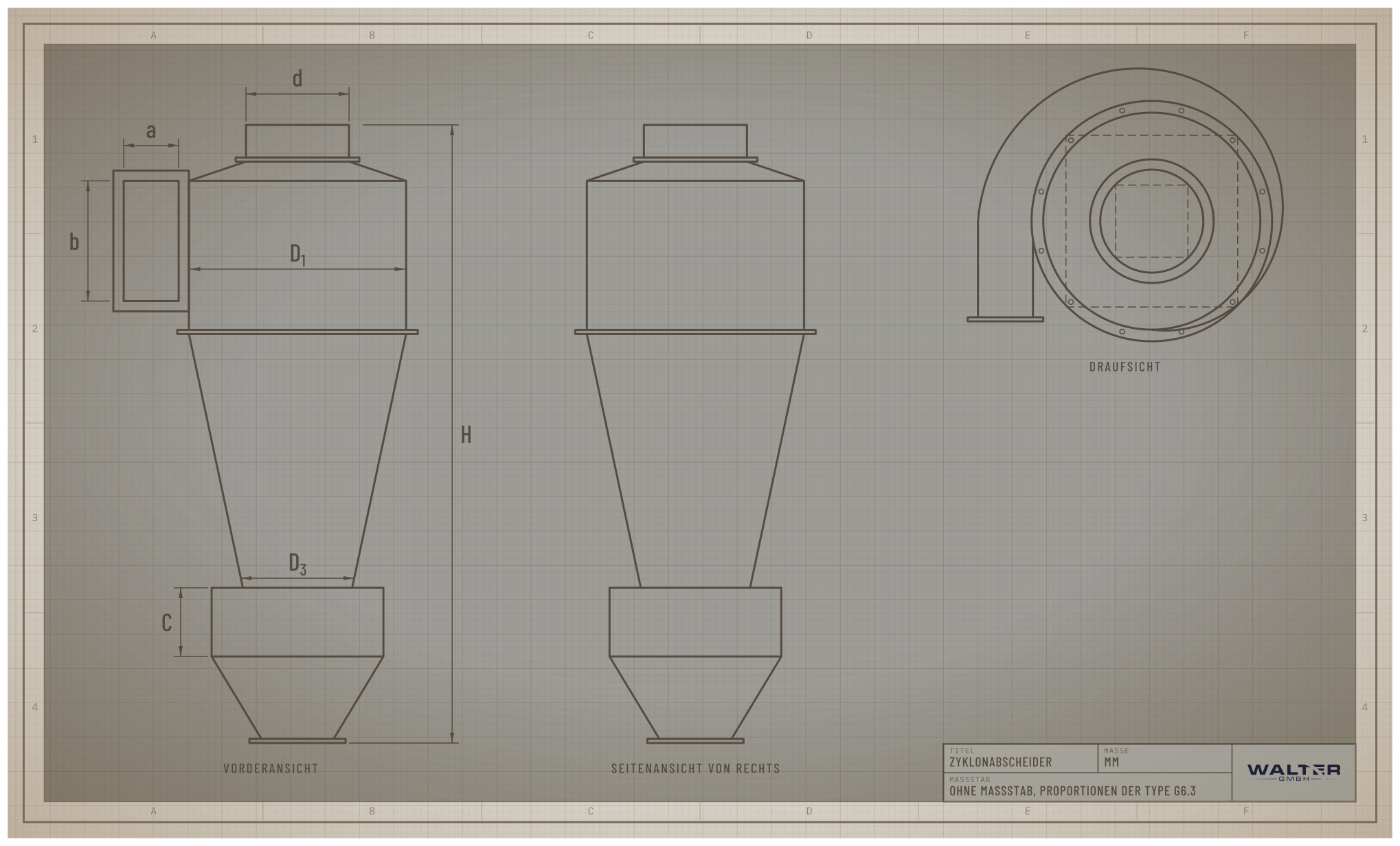
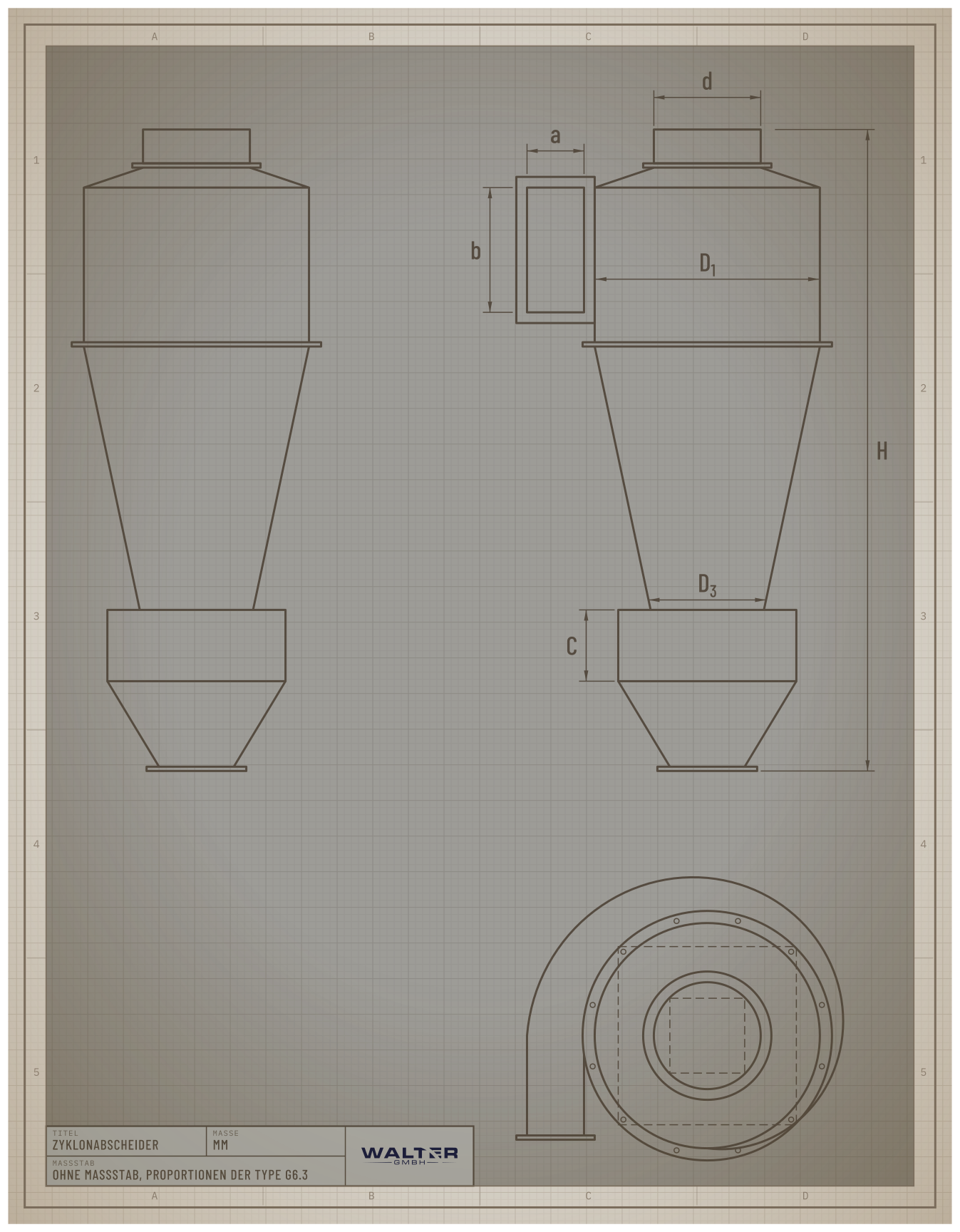
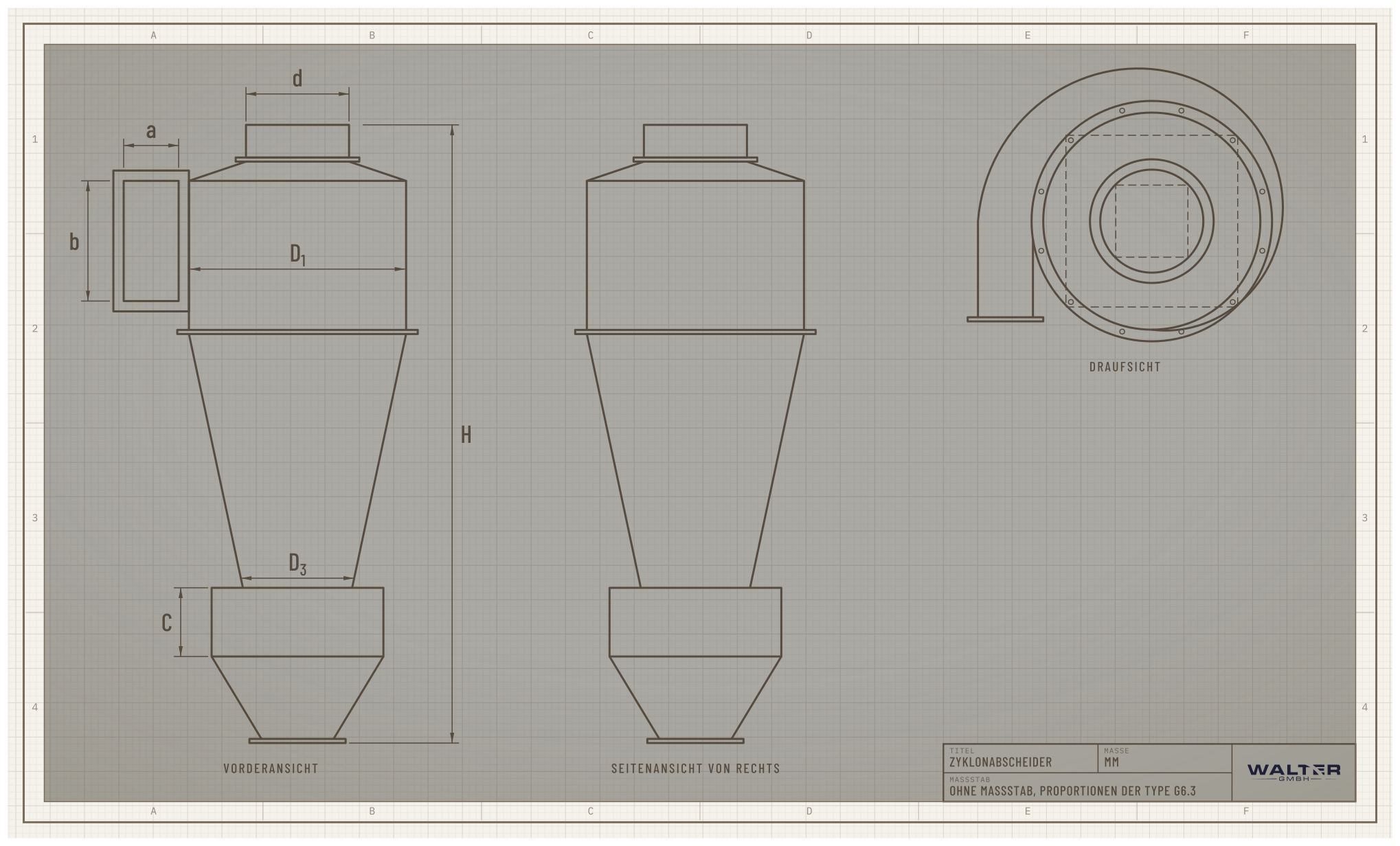
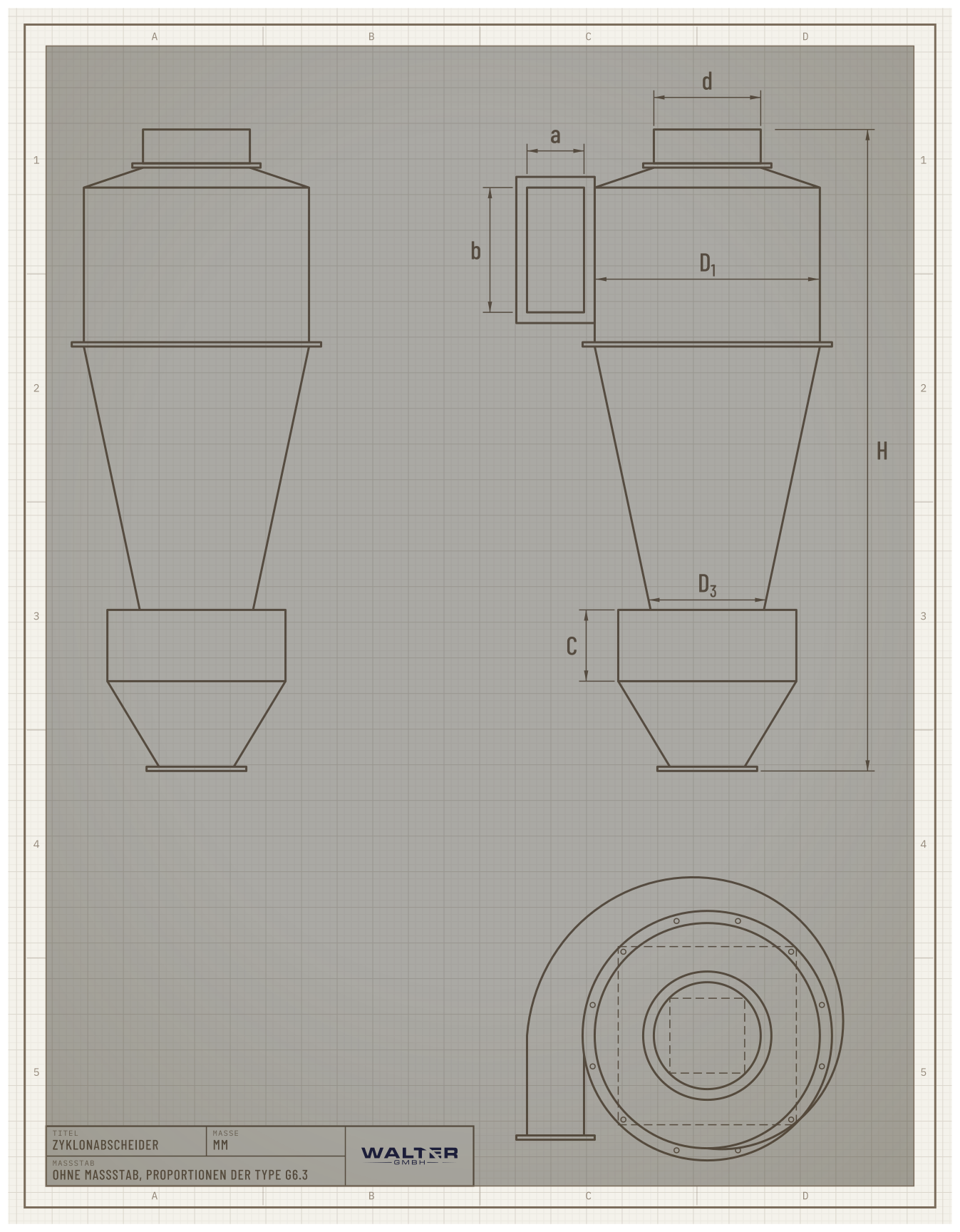
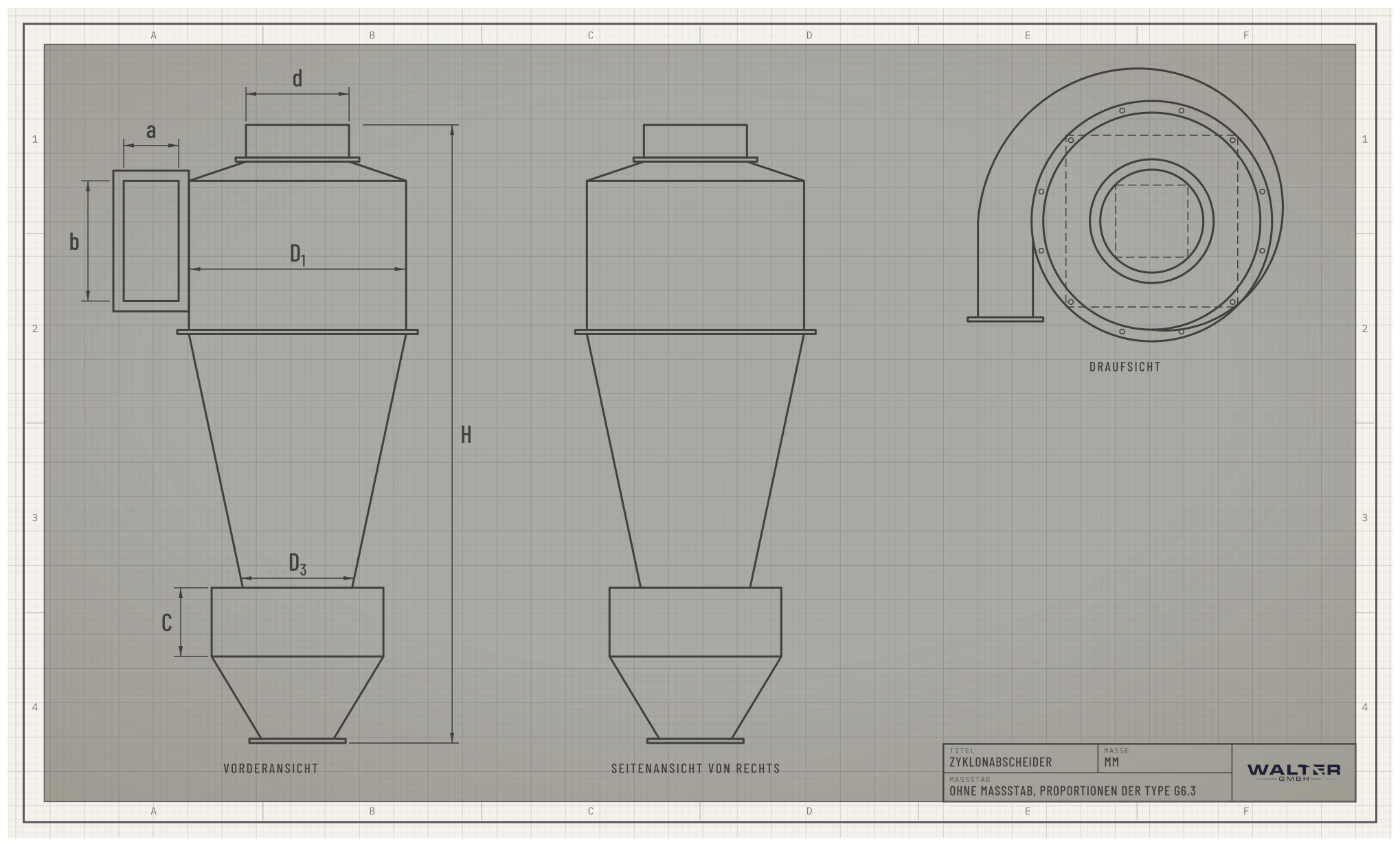
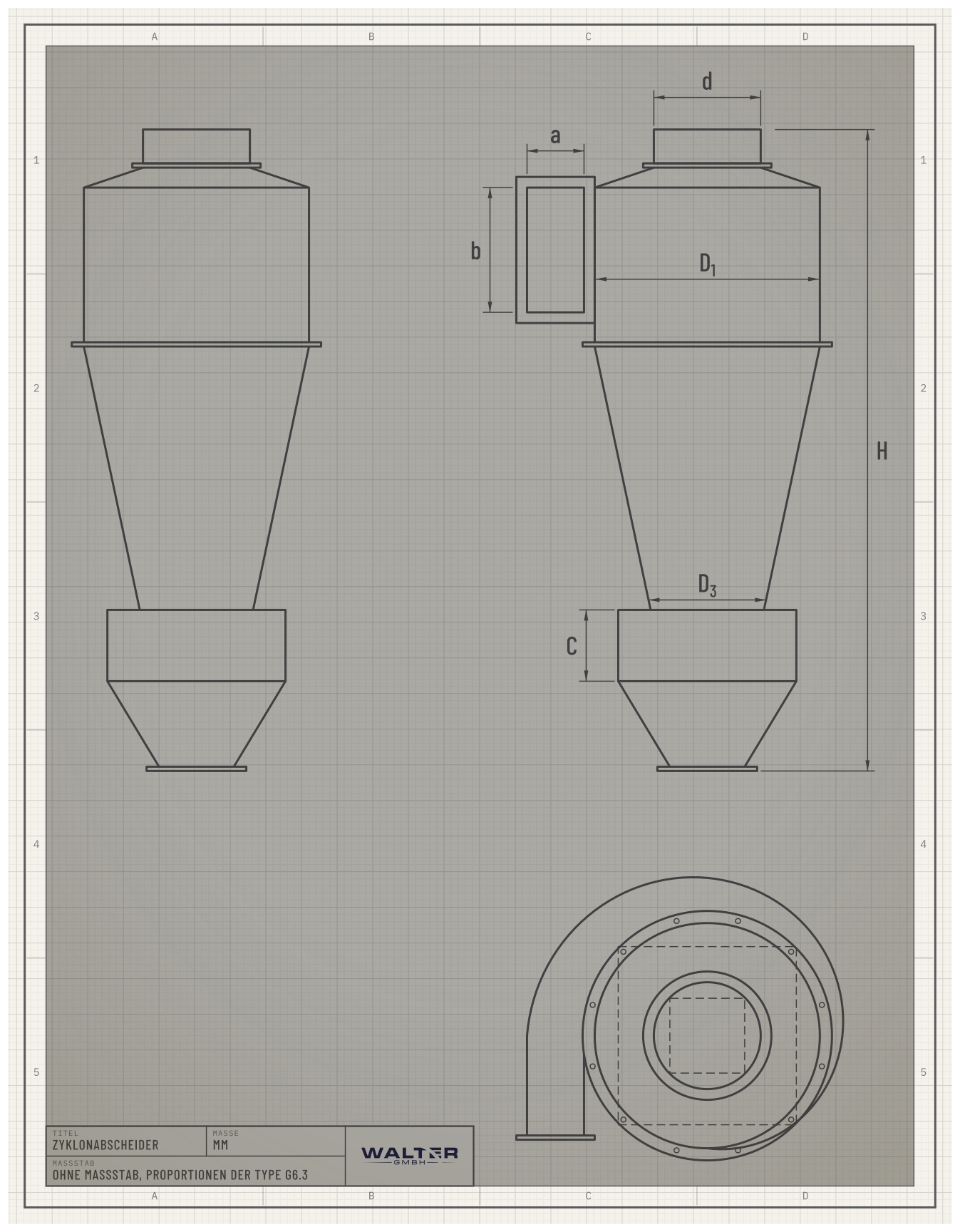
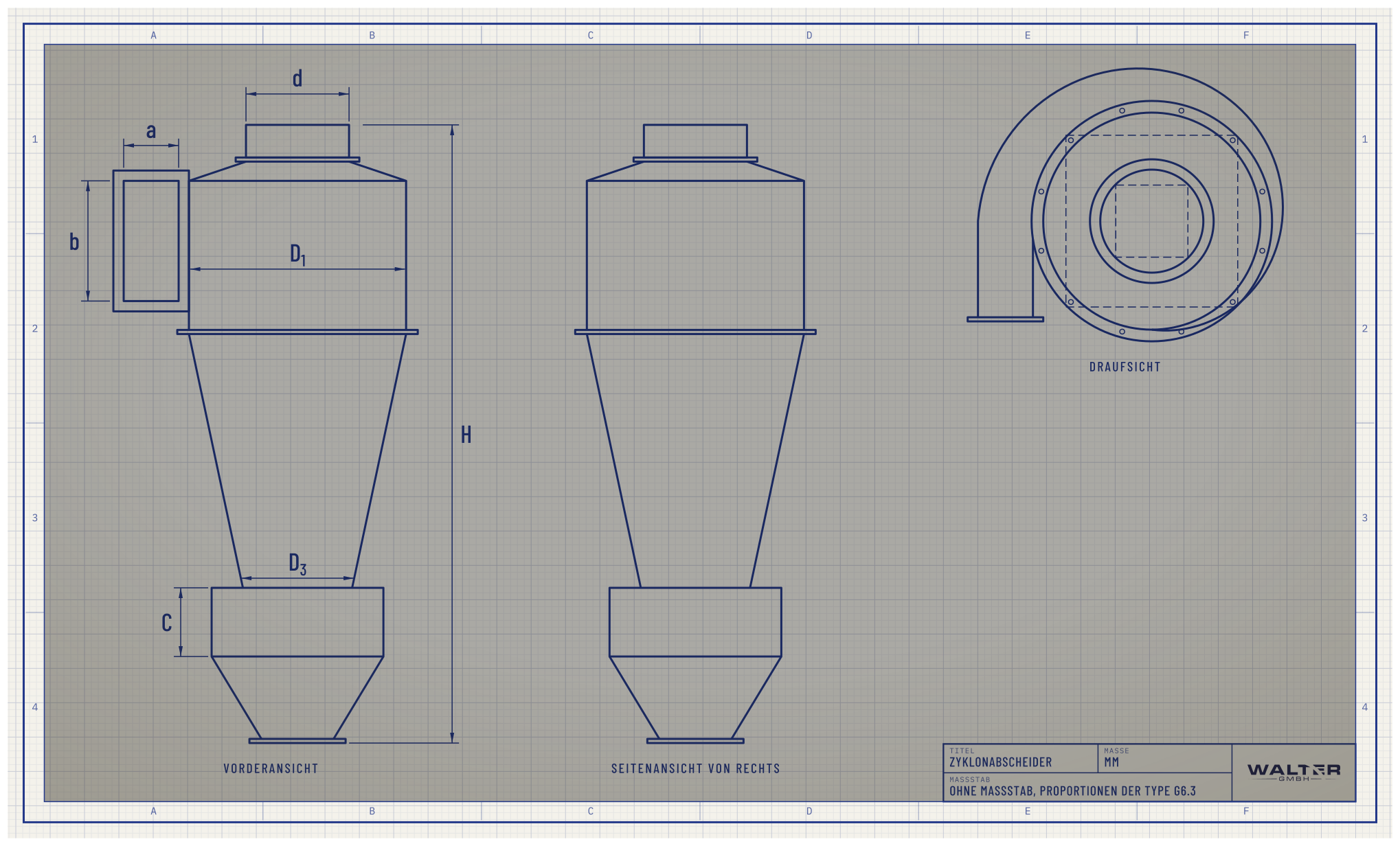
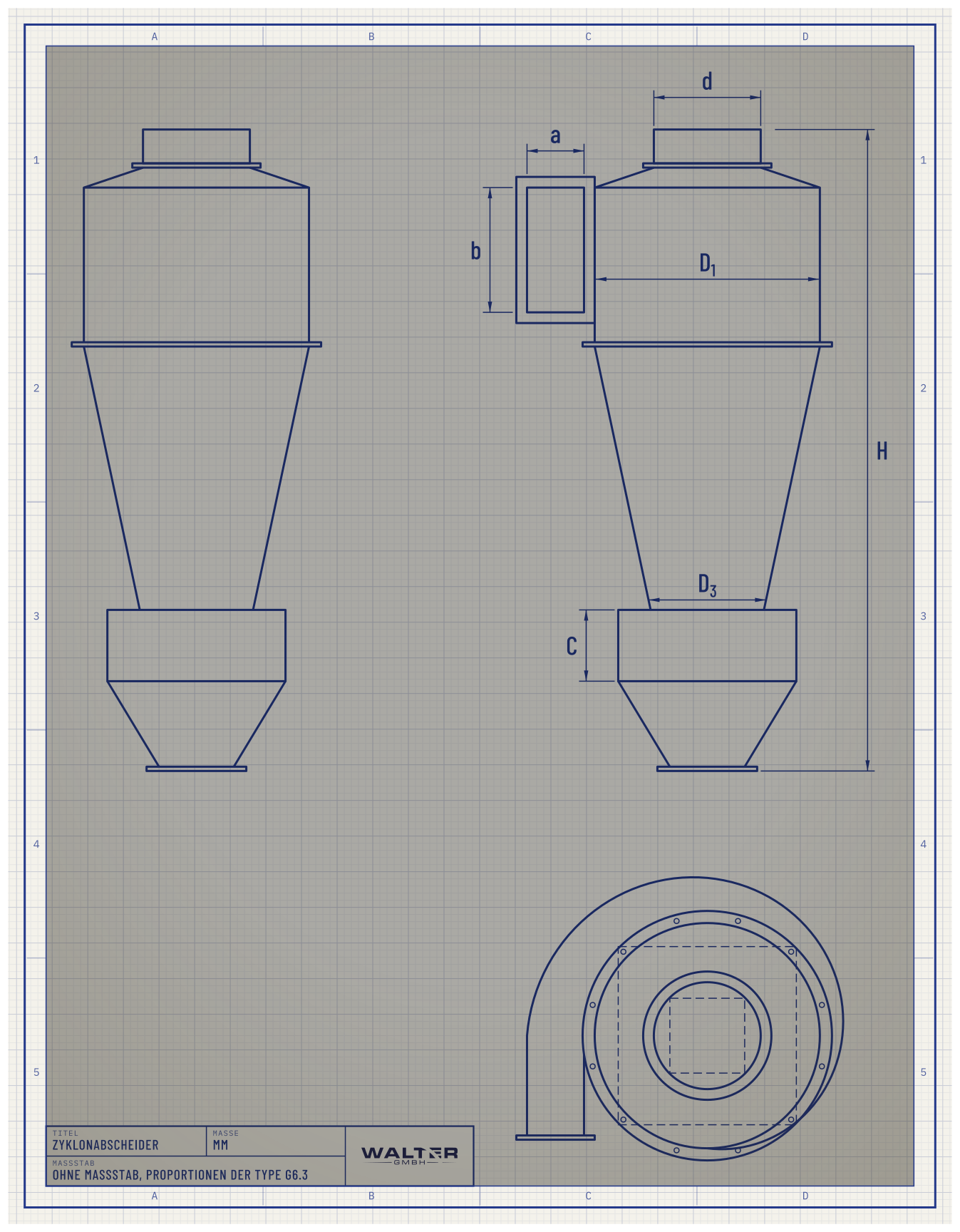
| Type | Volume flow (m³/h) | D₁ | d | a | b | D₃ | C | H |
|---|---|---|---|---|---|---|---|---|
| G4 | 900 - 1,250 | 400 | 180 | 80 | 280 | 170 | 160 | 1,380 |
| G5 | 1,450 - 1,900 | 500 | 224 | 120 | 300 | 220 | 160 | 1,590 |
| G6.3 | 2,300 - 3,100 | 630 | 300 | 160 | 350 | 295 | 200 | 1,800 |
| G7.1 | 2,850 - 3,850 | 710 | 350 | 160 | 450 | 340 | 200 | 1,950 |
| G8 | 3,650 - 5,000 | 800 | 400 | 180 | 500 | 395 | 275 | 2,270 |
| G9 | 4,600 - 6,200 | 900 | 450 | 200 | 570 | 440 | 315 | 2,420 |
| G10 | 5,800 - 7,800 | 1,000 | 500 | 220 | 650 | 495 | 360 | 2,700 |
| G11.2 | 7,100 - 9,800 | 1,120 | 560 | 240 | 750 | 550 | 360 | 3,000 |
| G12.5 | 9,000 - 12,200 | 1,250 | 600 | 280 | 800 | 590 | 400 | 3,360 |
| G14 | 12,000 - 15,200 | 1,400 | 710 | 300 | 930 | 700 | 500 | 3,960 |
| G16 | 16,800 - 20,000 | 1,600 | 800 | 320 | 1,200 | 790 | 500 | 4,310 |
| G18 | 19,000 - 25,500 | 1,800 | 900 | 380 | 1,250 | 890 | 500 | 4,610 |
| G20 | 29,500 - 34,000 | 2,000 | 1,000 | 500 | 1,250 | 990 | 500 | 4,850 |
| G22 | 30,200 - 41,000 | 2,200 | 1,120 | 600 | 1,250 | 1,100 | 630 | 5,150 |
| G24 | 38,000 - 50,000 | 2,400 | 1,250 | 600 | 1,500 | 1,190 | 630 | 5,800 |
| G25 | 44,100 - 60,000 | 2,500 | 1,400 | 720 | 1,500 | 1,300 | 630 | 6,200 |
Combination with Downstream Filters
Cyclone separators achieve a high separation efficiency for medium and coarse particles, but are not suitable for fine dust and aerosols. For complete cleaning of the exhaust air, the cyclone is usually combined with a bag filter, cartridge filter or pocket filter.
The connection dimensions of WALTER cyclones are matched to the SF (bag filter) and MPS (cartridge filter) series. On request we deliver the complete plant including ductwork, shut-off dampers, fan and control system from a single source and handle on-site installation.
Complementary Products
Cyclone separators are usually combined with other WALTER components to form a complete dust collection plant.
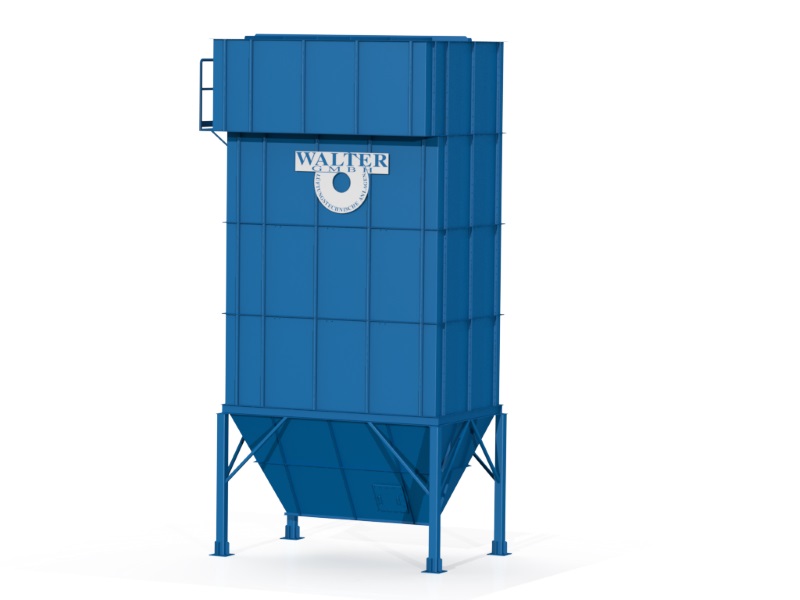
Main filter
Bag Filter
Modular bag filters of the SF series from 3,000 to 60,000 m³/h - the typical main filter behind a cyclone pre-separator.
Go to bag filter →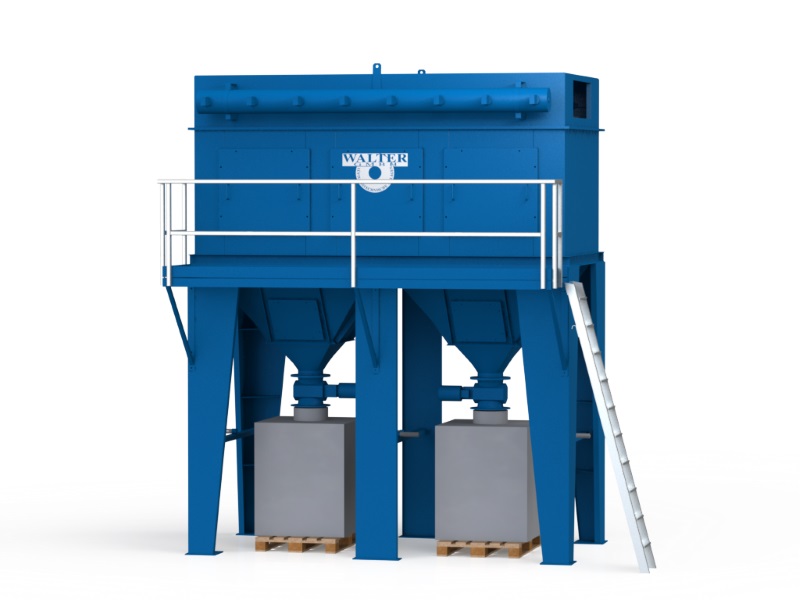
Main filter
Cartridge Filter
Compact MPS cartridge filter for workshop applications with high separation efficiency for fine dusts.
Go to cartridge filter →
Connection
Pipes and Ducts
Welded pipework according to DIN 24151 / EN 1506 to connect capture element, cyclone, main filter and fan.
Go to pipes and ducts →Frequently asked
Cyclone separators - what customers want to know before enquiring
When does a cyclone separator make sense?
A cyclone is worthwhile wherever coarse or heavy dusts and sparks occur at the same time. As a pre-separator upstream of a bag or cartridge filter it protects the filter medium, extends its service life and reduces fire risk. For pure bulk-material recovery without subsequent clean-air return the cyclone may also be used on its own.
What separation efficiency does a cyclone achieve?
Separation efficiency depends on particle size, density and flow velocity. For particles from approximately 10 µm typical efficiencies are 90 % and higher. Fine dust below around 5 µm is only partially separated and should be retained by a downstream filter.
Is a cyclone alone sufficient as a dedusting solution?
For very coarse and heavy dusts or pure bulk material recovery the cyclone alone is sufficient. However, if cleaned air is to be returned to the workspace or emission limits must be met, a combination with a bag, cartridge or pocket filter is required.
Which materials are used?
Standard construction is painted or galvanized sheet steel. For abrasive dusts wear-protection plates are added in the inlet and on the inner hopper wall.
How is the separated dust discharged?
By default the separated dust falls into a settling tank below the cyclone. For continuous operation or large dust volumes a rotary valve or screw conveyor is recommended; on request the discharge is fed directly into big bags or a collection container.
Which volume flow range is available?
WALTER cyclones are built from 1,000 m³/h up to 60,000 m³/h. Larger plants are realized by arranging several cyclones in parallel or by customer-specific design.
Would you like to learn more about Cyclone Separators?
Send us your inquiry!
Your inquiry is handled personally by our engineers and technicians.
We usually respond within one working day.